
 Save
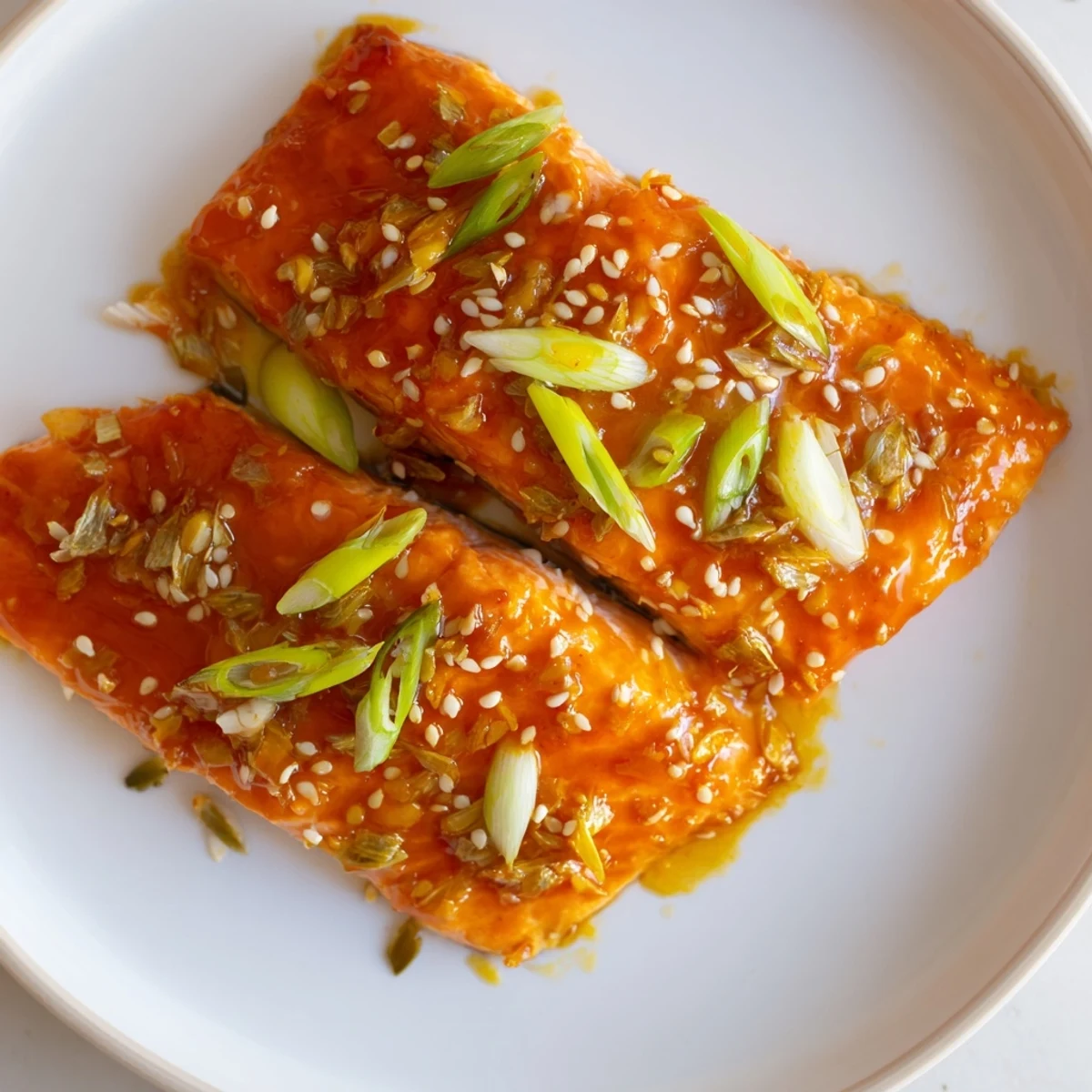
Save This dish features tender salmon fillets baked to perfection with a vibrant glaze made from fresh orange juice, ginger, honey, and soy sauce. The glaze enhances the fish with sweet and zesty flavors complemented by garlic and orange zest. Bake until flaky and top with green onions and sesame seeds for added texture and aroma. Ideal for a quick, nutritious dinner with hints of citrus and spice.
The smell of caramelizing citrus hit me before I even opened the oven door. I had tossed together orange juice and ginger on a whim one weeknight, hoping to salvage a dinner that felt too plain. What came out was glossy, golden, and tasted like something I'd order at a restaurant. I've been making it every few weeks since.
I made this for my sister the night she came over stressed about work deadlines. She ate in silence for a minute, then asked if I'd cater her next dinner party. I laughed, but she was serious. Sometimes a good meal is the only thing that resets the day.
Ingredients
- Salmon fillets: Skin-on keeps them moist, but skinless works fine if you prefer. Pat them very dry or the glaze won't cling properly.
- Olive oil: Just enough to keep the fish from sticking and to help the seasoning adhere before baking.
- Fresh orange juice: Squeeze it yourself if you can. Bottled juice tastes flat compared to the zing of a fresh orange.
- Honey or maple syrup: Honey gives a floral sweetness, maple adds depth. Either one caramelizes beautifully in the oven.
- Soy sauce: This is what balances the sweetness and adds a savory backbone. Use tamari if you need it gluten-free.
- Fresh ginger: Grate it finely so it melts into the glaze instead of sitting in chunks. The warmth it adds is irreplaceable.
- Orange zest: Don't skip this. It's where all the perfume lives, and it makes the glaze taste alive.
- Garlic: One clove is enough to add complexity without overpowering the citrus.
- Cornstarch slurry: Optional, but it turns the glaze into something thick and glossy that coats the back of a spoon.
- Green onions and sesame seeds: They add color and a little crunch. I started adding them after a friend said the dish looked too plain.
Instructions
- Prep the salmon:
- Pat the fillets dry with paper towels, then brush them lightly with olive oil and season both sides with salt and pepper. Dry fish sears better and holds seasoning.
- Make the glaze:
- Whisk everything together in a small saucepan and bring it to a gentle simmer. It'll smell incredible almost immediately, sweet and sharp at the same time.
- Thicken if desired:
- Let it bubble for a few minutes, then stir in the cornstarch slurry if you want it thicker. It should coat the back of your spoon and look glossy.
- Glaze and bake:
- Spoon half the glaze over the salmon, then slide the tray into a preheated oven. Bake until the fish flakes easily with a fork, about 12 to 15 minutes depending on thickness.
- Finish and serve:
- Drizzle the remaining glaze over the cooked salmon, then scatter green onions and sesame seeds on top. Serve it hot with rice or roasted vegetables.
 Save
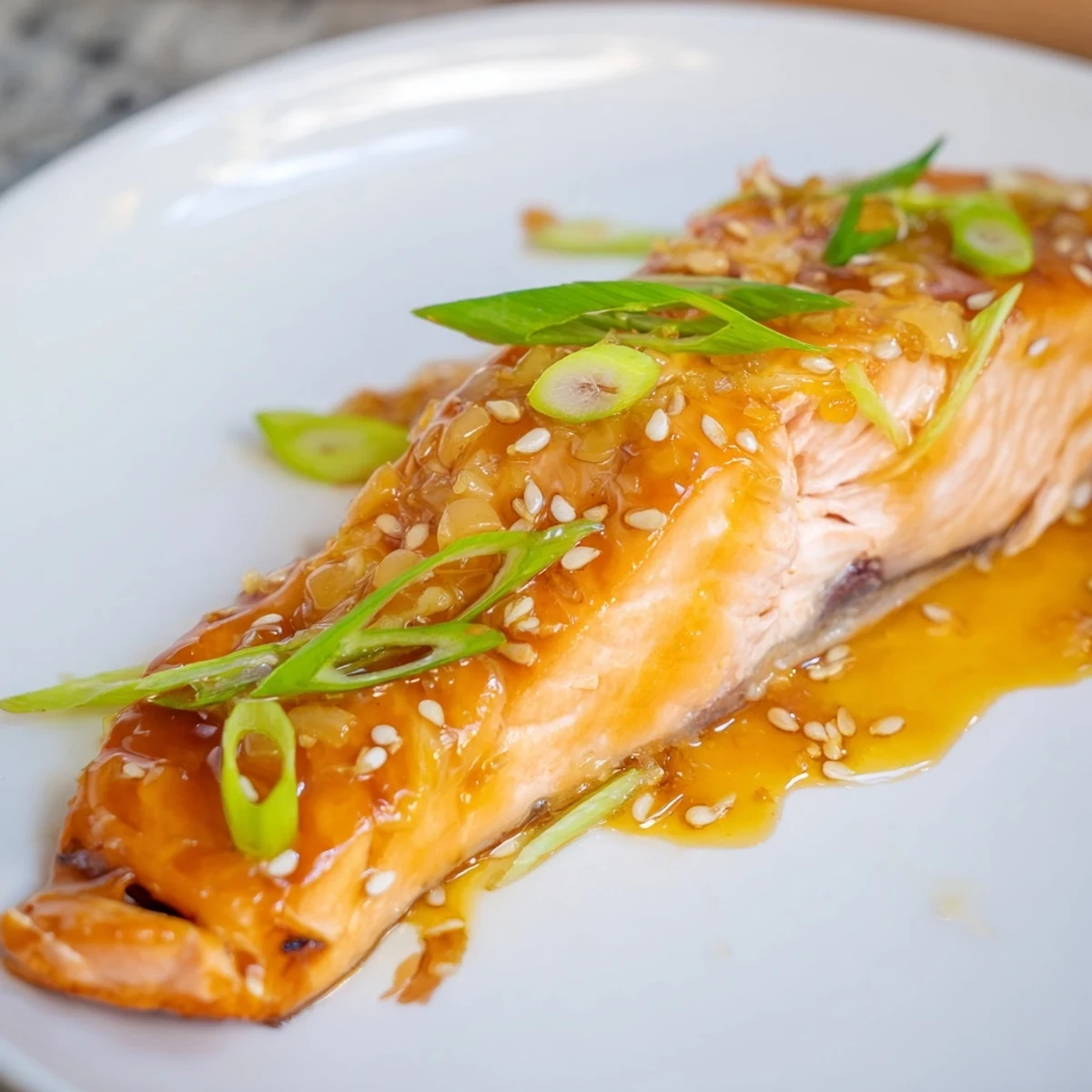
Save I started plating this with orange slices after my neighbor saw it cooling on the counter and said it looked like something from a magazine. Now I can't serve it without them. Presentation matters more than I used to think.
What to Serve It With
Steamed jasmine rice is my go-to because it soaks up the extra glaze without competing for attention. Roasted broccoli or asparagus works too, especially if you toss them with a little sesame oil. I've also served it over quinoa when I wanted something lighter, and no one complained.
How to Know When It's Done
The salmon should flake easily when you press a fork into the thickest part, and the center should be barely opaque. If you have a thermometer, aim for 63°C (145°F). I learned this the hard way after serving dry, overcooked fillets to guests. Now I check early and pull it out the second it's ready.
Variations and Swaps
If you like heat, add a pinch of red pepper flakes to the glaze while it simmers. I've also swapped the salmon for chicken thighs (just bake them longer) and it turned out great. Maple syrup instead of honey makes it vegan-friendly, and tamari keeps it gluten-free without changing the flavor.
- Try lime juice and cilantro instead of orange and green onion for a Thai-inspired twist.
- Add a tablespoon of rice vinegar to the glaze for extra tang.
- Serve it cold over salad greens the next day. It's just as good at room temperature.
 Save
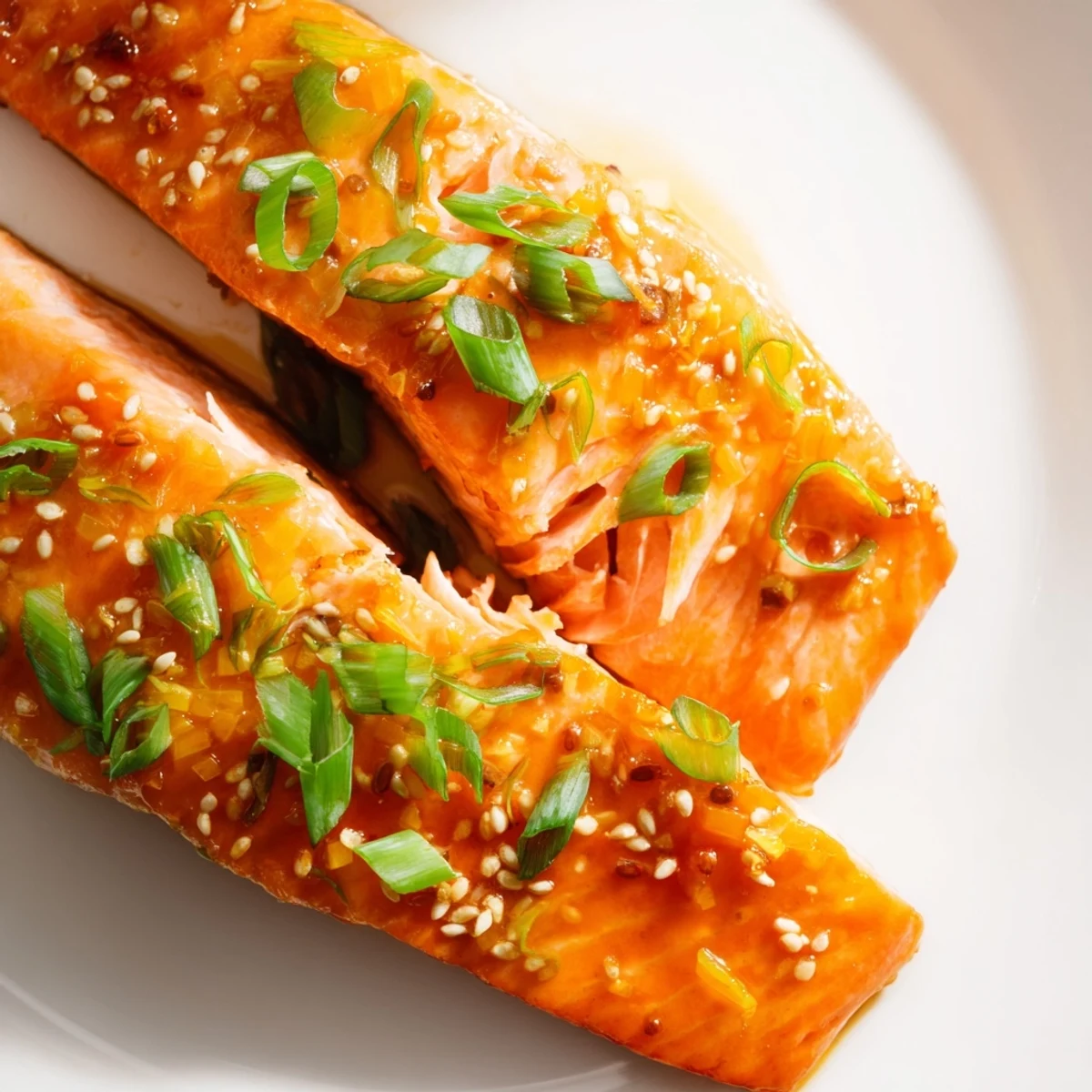
Save This dish taught me that weeknight dinners don't have to be boring, and that a little citrus and ginger can turn something ordinary into something you actually look forward to. I hope it does the same for you.
Recipe FAQs
- → What is the best way to bake salmon for this dish?
-
Preheat your oven to 200°C (400°F). Bake the salmon on a lined tray for 12–15 minutes until it flakes easily with a fork, indicating it's cooked through.
- → How can I thicken the orange-ginger glaze?
-
Stir in a mixture of cornstarch and cold water into the glaze and cook for another 1–2 minutes until it reaches your desired consistency.
- → What can I substitute for honey in the glaze?
-
Maple syrup works well as a vegan-friendly alternative, maintaining the glaze's sweetness and texture.
- → Can I make the glaze spicier?
-
Yes, adding a pinch of red pepper flakes to the glaze will give it a subtle kick without overpowering the citrus flavors.
- → What side dishes pair well with the baked salmon?
-
Steamed jasmine rice or roasted vegetables complement the flavors and make for a balanced, satisfying meal.