
 Save
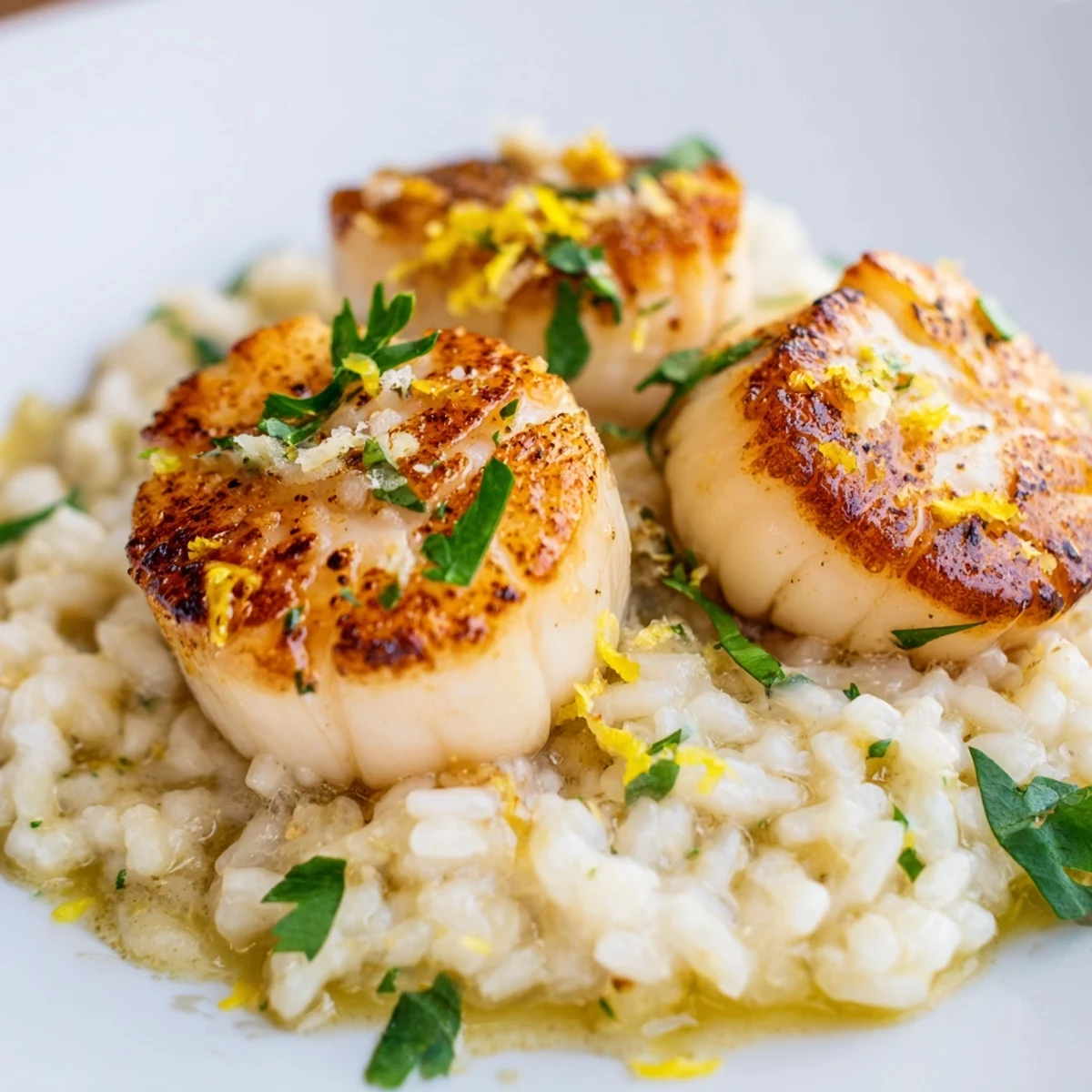
Save Experience tender sea scallops seared to golden perfection, enveloped in a bright lemon-garlic butter sauce. These scallops rest elegantly over a bed of creamy Parmesan risotto, crafted by slowly infusing Arborio rice with broth, white wine, and shallots. Fresh parsley adds a herbaceous touch while the richness of butter and cheese completes this Italian-inspired seafood dish that balances zest and creaminess for special occasions or elevated dinners.
The first time I made scallops with risotto, I was terrified they'd turn into rubber. My hands were shaking as I dropped them into the hot pan, but the moment that golden crust formed—that perfect sear in just two minutes—I realized these tender little treasures were actually forgiving. Cooking them became a meditative ritual: the broth bubbling gently in the background, garlic and lemon dancing in butter, and suddenly dinner felt less like a technique and more like poetry on a plate.
I made this for my partner on an ordinary Thursday when he mentioned missing fine dining. Watching him pause on the first bite—that suspended moment before the smile—reminded me that restaurant magic isn't about fancy techniques but about paying attention. The kitchen smelled like a Michelin-starred dream, and somehow we'd created it ourselves in thirty-five minutes.
Ingredients
- Large sea scallops (1 lb): Pat them dry before cooking—moisture is your enemy for that coveted golden crust. Buy them from a reputable fishmonger if you can; they make all the difference.
- Arborio rice (1 1/4 cups): This starchy short-grain rice is what creates that creamy dream texture without any cream involved (though a splash of it at the end is never wrong).
- Dry white wine (1/2 cup): Use something you'd actually drink; the cheap stuff really shows in the final taste.
- Warm broth (4 cups): Keeping it warm means the rice releases its starch more evenly and risotto becomes silky rather than gummy.
- Fresh lemon zest and juice: This is where the brightness lives—don't skip it or use bottled, the real thing transforms everything.
- Unsalted butter and Parmesan: Quality matters here since they're the final flourish; good butter tastes nutty and alive, good Parm tastes sharp and real.
Instructions
- Build the base:
- Heat olive oil and butter together in a large saucepan over medium heat, then add finely diced shallot. Cook gently for about two minutes until soft and fragrant—this creates the foundation for all the flavor that follows. You'll know it's ready when the kitchen smells like the beginning of something good.
- Toast the rice:
- Stir in your Arborio rice and keep stirring for a couple of minutes until the grains look slightly translucent at the edges and smell a bit toasty. This step sounds small but it prevents gummy risotto and gives the rice a subtle, nutty depth.
- Deglaze with wine:
- Pour in the dry white wine all at once, then stir gently until it's completely absorbed into the rice—you'll watch it happen, which is oddly satisfying. The alcohol cooks off and leaves behind a subtle acidity that balances the creaminess.
- Add broth gradually:
- This is where patience becomes your best friend. Add warm broth about half a cup at a time, stirring gently and letting each addition absorb fully before adding more—this usually takes eighteen to twenty-two minutes total. You're coaxing the rice to release its starches slowly, creating creaminess from within rather than depending on heavy cream.
- Finish the risotto:
- When the rice is tender but still has a slight bite (what Italians call al dente), stir in grated Parmesan and heavy cream if using, then taste and adjust seasoning. Cover and set aside to stay warm while you handle the stars of the show.
- Prepare the scallops:
- Pat them absolutely dry with paper towels—any moisture is moisture that prevents browning. Season both sides generously with salt and pepper just before cooking.
- Sear the scallops:
- Heat olive oil in a large nonstick skillet over medium-high heat until it's shimmering and just barely smoking. Place scallops in a single layer and resist every urge to move them for exactly two minutes; that stillness is what creates the golden crust you're after.
- Finish cooking:
- Flip the scallops gently, then add butter and minced garlic to the pan. Cook for another one to two minutes until the scallops just turn opaque all the way through—they'll keep cooking slightly even after you remove the pan from heat.
- Brighten with citrus:
- Remove the pan from heat, then swirl in lemon zest, fresh lemon juice, and chopped parsley. This final moment of finishing sauce is where everything transforms from good to luminous.
- Plate and serve:
- Divide the creamy risotto among plates, top each portion with seared scallops, then drizzle everything with the lemon-garlic butter from the pan. A final scatter of parsley and extra lemon zest if the mood strikes.
 Save
Save There's a moment midway through stirring risotto when steam rises up and your face gets warm and you think, "I could just stand here," and that's when you know the dish has already won. The scallops are just the elegant finishing touch, but the risotto is the heart that keeps beating underneath, creamy and forgiving and deeply satisfying.
The Art of the Perfect Sear
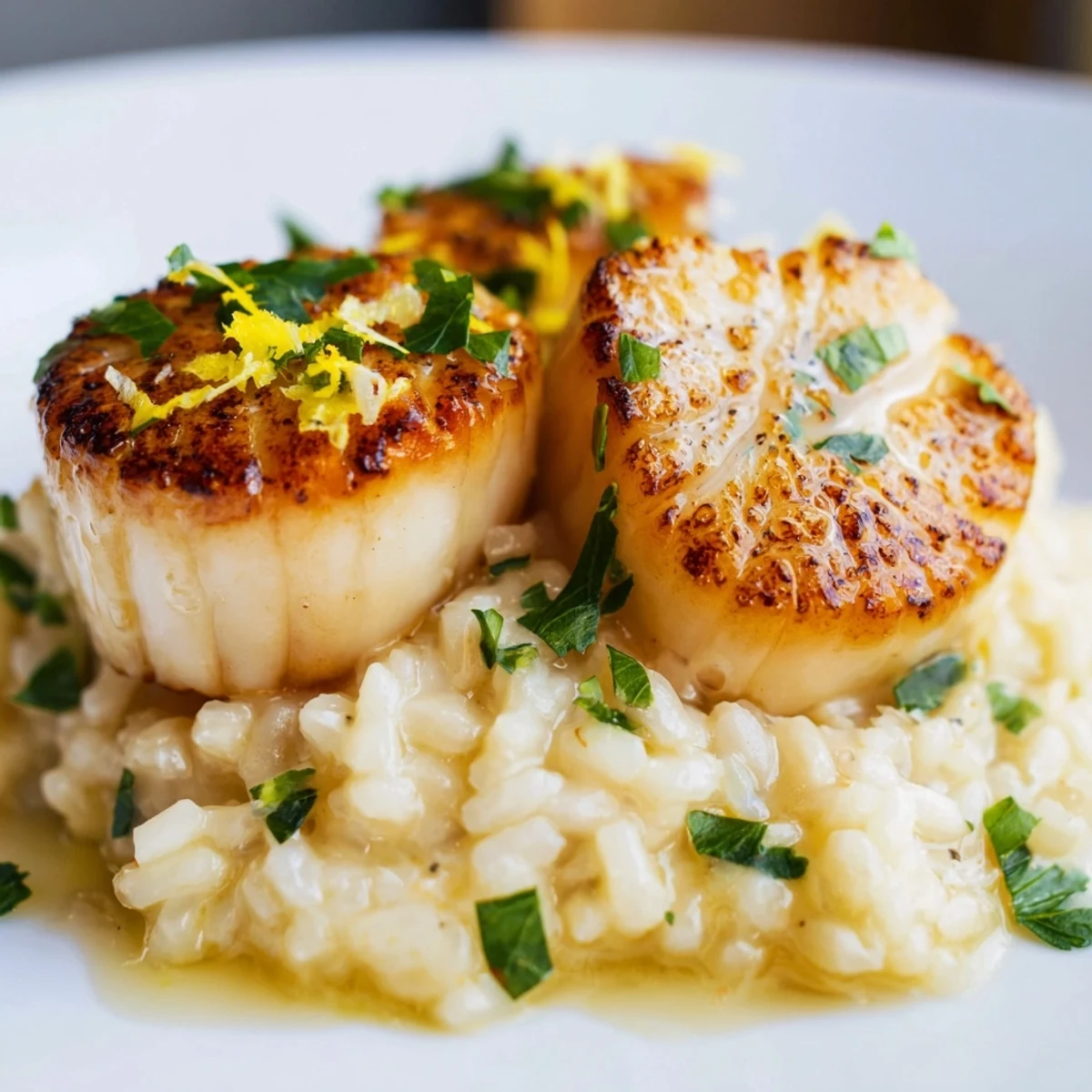
A golden, caramelized sear on scallops is pure chemistry—the Maillard reaction creating hundreds of new flavors from just heat, protein, and patience. The key is dryness, high heat, and the discipline to leave them alone. When I stopped fussing with them and trusted the process, every single batch came out restaurant-quality, which taught me that sometimes the most refined results come from the simplest actions.
Risotto as a Canvas
Risotto is wonderfully flexible once you understand the method—the technique stays the same whether you're using seafood broth, mushrooms, or spring peas. I've made versions with white wine and versions with champagne, added saffron in winter and fresh herbs in summer, and the soul of the dish never changed. It's a recipe that rewards experimentation because the foundation is so solid.
Making This Dish Your Own
The beauty of this recipe is that it handles variations gracefully without losing its character. You can swap shrimp for scallops, use vegetable broth instead of chicken, or add a handful of peas or asparagus to the risotto without disrupting the balance. Every choice you make becomes part of your version of the dish, and that's where cooking shifts from following directions to creating something that tastes like you.
- Substitute large shrimp for scallops if that's what your fishmonger has, using the same timing and technique.
- A splash of crisp white wine—Sauvignon Blanc or Pinot Grigio—beside your plate turns dinner into an occasion.
- Leftovers reheat gently with a splash of broth stirred in, though honestly, this is best eaten fresh and warm the first time around.
 Save
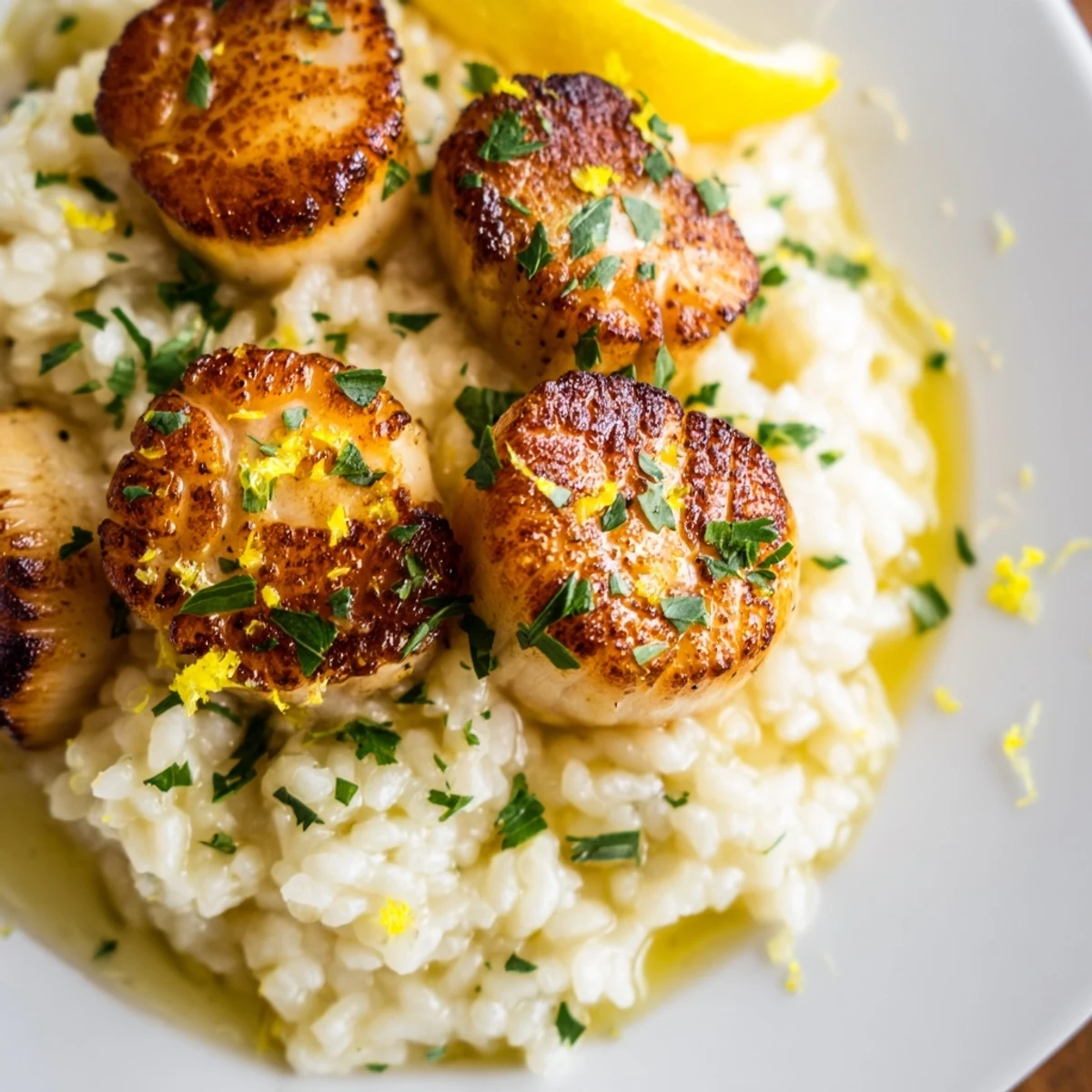
Save This dish lives at the intersection of elegance and ease, which is exactly where the most satisfying meals tend to live. When you serve it, you're not just serving food—you're sharing the feeling of a restaurant-quality moment created in your own kitchen.
Recipe FAQs
- → How do I achieve a perfect sear on scallops?
-
Ensure scallops are thoroughly patted dry to avoid steaming. Use a hot skillet with enough oil and don't move them while searing to develop a golden crust.
- → Can I substitute the broth used in the risotto?
-
Yes, vegetable broth works well for a pescatarian variation and maintains the risotto's depth of flavor without overpowering the scallops.
- → What is the best way to add creaminess to the risotto?
-
Stir in freshly grated Parmesan cheese and optionally a splash of heavy cream at the end of cooking for a rich, velvety texture.
- → How do lemon zest and juice enhance the dish?
-
Lemon zest and juice brighten the scallops with fresh acidity, balancing the richness of butter and adding vibrant flavor layers.
- → Can I prepare this dish for a dinner party?
-
Absolutely. The risotto can be prepared ahead and gently reheated, while scallops are quickly seared before serving for a sophisticated presentation.