
 Save
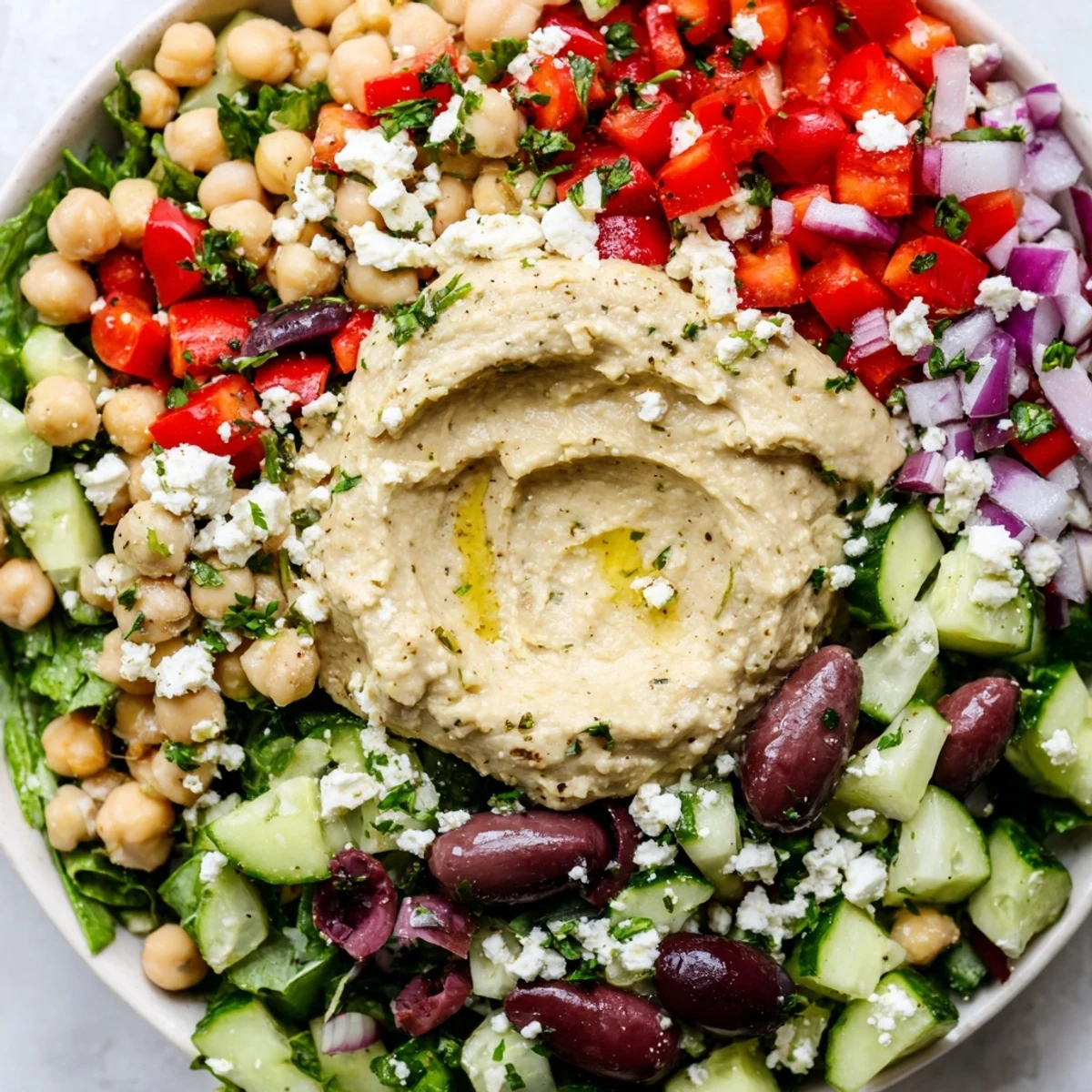
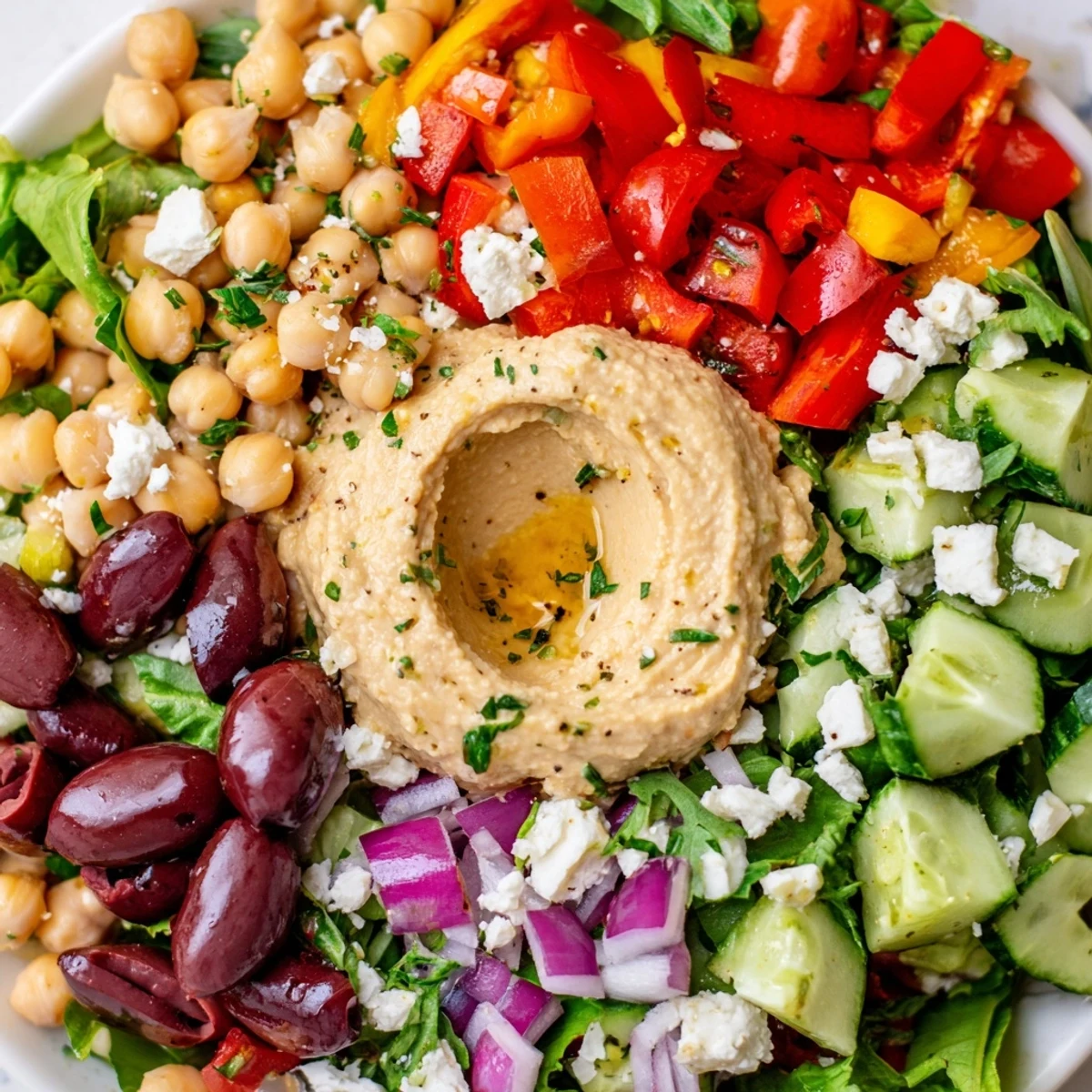
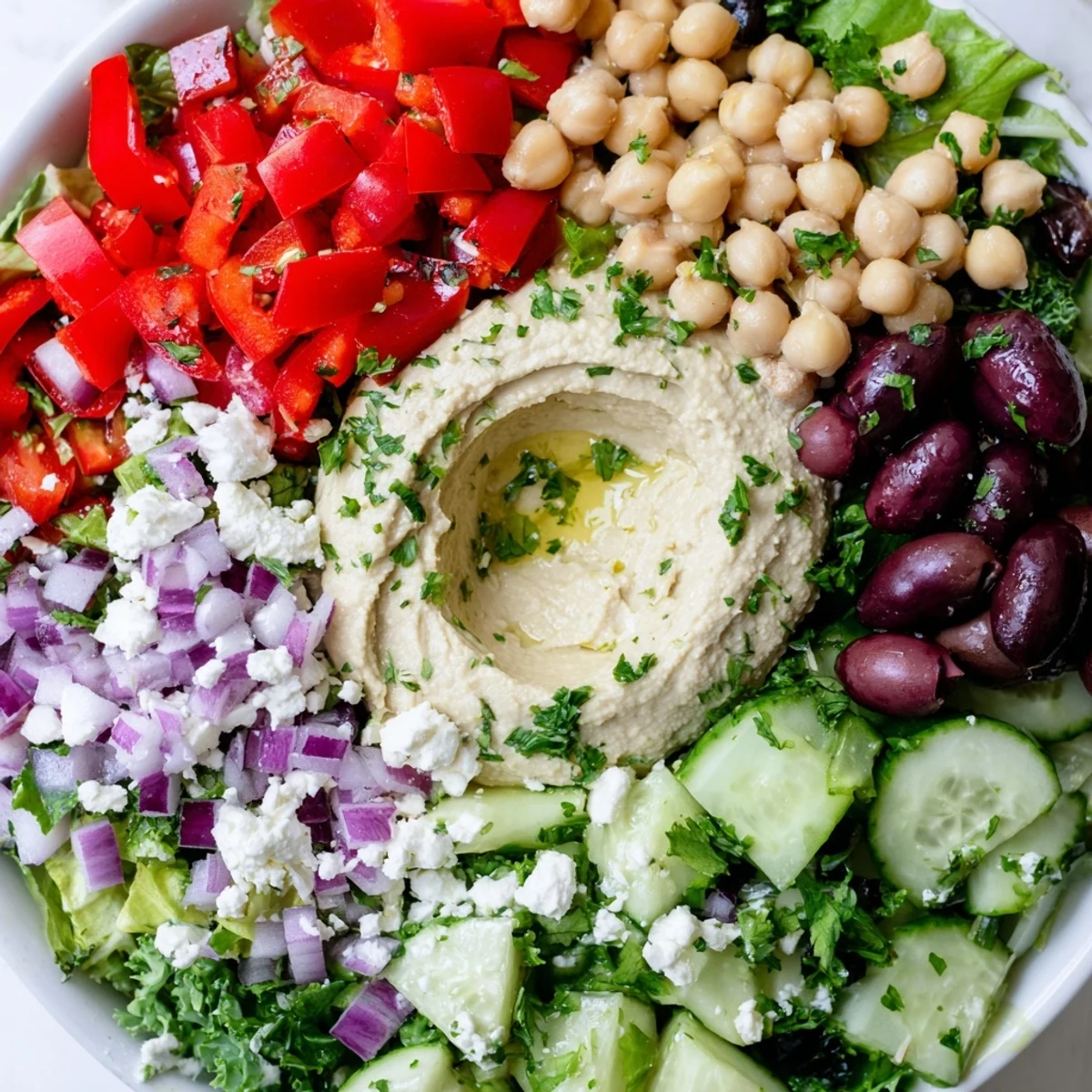
Save This Mediterranean salad features fresh cucumber, cherry tomatoes, peppers, and mixed greens tossed with olives, chickpeas, and feta. A zesty dressing of olive oil, lemon, garlic, and oregano enhances the flavors. Each serving is topped with a dollop of creamy hummus, adding richness and creaminess to the dish. Perfect for a light, nutritious lunch or side, it celebrates bright, fresh ingredients and simple, wholesome preparation.
There's something about throwing together a Mediterranean salad on a lazy afternoon that feels less like cooking and more like assembling a small garden on a plate. I discovered this particular combination while trying to use up whatever was lingering in my crisper drawer—cucumber slices, a handful of cherry tomatoes, some olives I'd been saving. The hummus dollop came later, almost by accident, when I realized the salad needed something creamy to anchor all those fresh, bright flavors. Now it's become my go-to when I want something that tastes like a vacation and takes barely any time at all.
I made this for a group of friends on a sun-soaked patio last summer, and I remember being struck by how everyone kept coming back for seconds without even realizing they were eating something so straightforwardly healthy. One friend asked for the recipe right there between bites, which honestly doesn't happen often enough to forget. That's when I knew this wasn't just a weeknight salad—it was something people actually wanted to make at home.
Ingredients
- Cucumber: Choose one that's still firm, not soft or wrinkled—you want that satisfying crunch that stays crisp even after the dressing sits on it.
- Cherry tomatoes: Halving them instead of leaving them whole keeps them from rolling around and makes every bite more balanced.
- Red bell pepper: The sweetness cuts through the briny olives and salty feta in the best way possible.
- Red onion: Slice it thin so it wilts slightly into the salad and mingles with the dressing without being sharp or overpowering.
- Mixed greens: Use whatever leafy green you love—arugula adds a peppery edge, romaine gives structure, baby spinach is soft and mild.
- Cooked chickpeas: Drain canned chickpeas well and rinse them thoroughly to keep the salad from turning watery and to remove that metallic canned taste.
- Feta cheese: The crumbles add a salty, tangy note that feels essential, though leaving it out keeps everything vegan-friendly.
- Kalamata olives: Pit them yourself if you can—jarred pitted olives sometimes taste a bit tired, and fresh-pitted ones have better flavor.
- Fresh parsley: Chop it just before serving so it stays bright green and fragrant instead of turning dark and limp.
- Extra virgin olive oil: This is where quality actually matters—use something you'd taste on its own, because you will.
- Lemon juice: Fresh squeezed makes an enormous difference; bottled just tastes sad in comparison.
- Garlic: Mince it fine so it distributes evenly through the dressing and doesn't leave harsh chunks.
- Dried oregano: A small amount adds that Mediterranean warmth without making the salad taste like an Italian restaurant.
Instructions
- Prepare the vegetables with intention:
- Dice the cucumber and bell pepper into roughly the same size so every bite feels complete and balanced. Halve the cherry tomatoes lengthwise rather than in quarters—they'll be less likely to squish when you toss everything together.
- Bring it all together in one bowl:
- Combine the cucumber, tomatoes, pepper, onion, greens, chickpeas, feta, olives, and parsley in a large bowl. Resist the urge to dress it yet—this is the moment to appreciate how colorful and fresh everything looks before the dressing darkens it all.
- Make the dressing come alive:
- Whisk the olive oil, lemon juice, minced garlic, oregano, salt, and pepper in a small bowl until the mixture looks slightly thickened and emulsified. Taste it on a piece of cucumber before committing it to the whole salad—this is your last chance to adjust the seasoning.
- Dress and toss gently:
- Pour the dressing over the salad and use two spoons or your hands to toss everything together with enough care that you're coating each piece without crushing the greens or flattening the tomatoes. The salad should glisten but not be drowning in dressing.
- Plate it with the hummus as the anchor:
- Divide the salad among serving bowls or plates, then top each portion with a generous dollop of hummus right in the center. The hummus acts as both a flavor anchor and a creamy counterpoint to all the fresh crispness around it.
- Serve with fresh garnishes:
- Scatter a bit more fresh parsley over the top just before serving, or try a light sprinkle of sumac for extra brightness and tartness. Serve immediately while everything is still cold and the greens haven't started to wilt.
 Save
Save This salad reminds me that the best meals don't always require skill or time—sometimes they just require paying attention to what's fresh and having the confidence to put it on a plate. It's become my answer to the "I don't know what to make" moment, the recipe that never disappoints.
Why This Salad Works as a Main Dish
The hummus is the secret here—it's protein-rich and creamy enough to make this feel like a complete meal rather than something you eat before the real food arrives. The chickpeas add their own protein and substance, so you're not just eating leaves with toppings, you're eating something that actually satisfies. Add a piece of warm pita bread or some crackers on the side and you've got a lunch that keeps you full for hours.
How to Make It Your Own
The beauty of this salad is that it's a framework, not a rule. I've made it with diced avocado stirred in for creaminess, with grilled chicken breast for extra protein, with artichoke hearts when I'm feeling fancy. Some versions get a small handful of pine nuts or sunflower seeds for crunch. The dressing stays the same, and everything else is negotiable based on what's in your kitchen or what you're in the mood for.
Serving and Storage Tips
This salad is best served immediately after dressing, when everything is still cold and crisp and the flavors are at their brightest. If you need to make it ahead, keep the dressing separate and dress it just before serving—the vegetables will keep for a day or two in the fridge, but the greens will wilt if they sit in dressing for more than an hour or two. The hummus stays good for a few days in the fridge in its own container, which is handy if you want to make extra for snacking on pita or vegetables.
- For meal prep, dress only the portion you're eating and keep the rest undressed in the fridge.
- A squeeze of extra lemon juice perks everything up if it's been sitting for a while.
- Warm pita bread or gluten-free crackers on the side make this feel like a more substantial meal.
 Save
Save There's real comfort in knowing you can make something this fresh and nourishing whenever you want, without fuss or complicated technique. This salad has earned a permanent spot in my regular rotation.
Recipe FAQs
- → What vegetables are best for this salad?
-
Cucumber, cherry tomatoes, red bell pepper, red onion, and mixed greens such as arugula or romaine provide crispness and fresh flavor balance.
- → Can the feta cheese be omitted?
-
Yes, omitting feta makes the dish vegan-friendly without sacrificing texture and taste.
- → How is the dressing made?
-
The dressing combines extra virgin olive oil, lemon juice, garlic, dried oregano, salt, and black pepper whisked until emulsified.
- → What can be served with this salad?
-
Warm pita bread, gluten-free crackers, or a light white wine like Sauvignon Blanc complement the salad nicely.
- → How is the hummus used in the dish?
-
A generous dollop of creamy hummus is placed on top of each salad portion, providing rich texture and flavor contrast.