
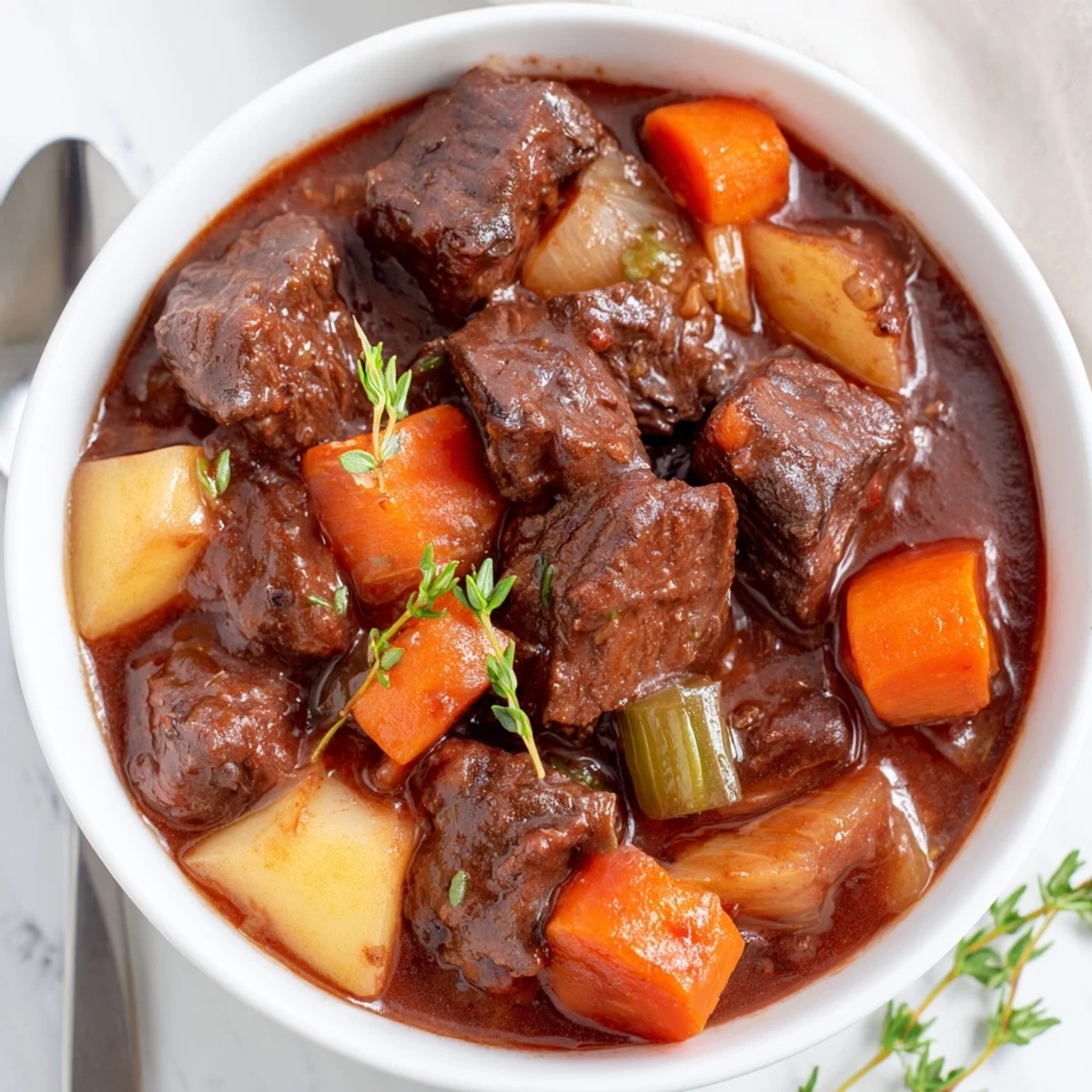
 Save
Save This hearty Italian braised beef dish features succulent chuck meat slowly simmered with aromatic vegetables and red wine. The traditional preparation begins with searing beef cubes to develop deep caramelized flavors, then building a savory base with soffritto vegetables. Red wine deglazing adds complexity while herbs like rosemary and thyme infuse the broth. The long, gentle cooking time transforms tough beef into fork-tender perfection, while potatoes absorb the rich, flavorful sauce. Serve this comforting main dish with crusty bread or creamy polenta to complete the Italian dining experience.
The window in my kitchen was fogged up from the inside, and outside a November rain hammered the glass like it wanted in for dinner. I had a chunk of beef chuck sitting on the counter and nothing but time, which is really all you need for spezzatino. The smell that filled the apartment two hours later was the kind that makes neighbors knock.
I once made this for a friend who claimed she did not eat stew, and she cleaned her bowl, went back for seconds, and asked if there was bread to mop the pot. That pot went straight from the stove to the sink soak with nothing but a satisfied smudge of sauce left inside.
Ingredients
- 800 g beef chuck, cut into 3 cm cubes: Chuck is the only cut that melts into tenderness after a long braise without falling apart into shreds.
- 2 medium onions, finely chopped: They dissolve into the sauce and create a sweet, savory base you cannot achieve any other way.
- 2 carrots, sliced: Cut them on the thicker side so they hold their shape through the long cook.
- 2 celery stalks, sliced: Celery adds an earthy backbone that people never guess is there but always miss when it is gone.
- 2 medium potatoes, peeled and cubed: They release starch into the broth, helping it thicken naturally without any flour.
- 2 garlic cloves, minced: Fresh garlic only, and add it late so it never turns bitter.
- 250 ml dry red wine: Something you would drink, not something labelled cooking wine.
- 500 ml beef stock: Low sodium lets you control the salt level from start to finish.
- 2 tbsp tomato paste: A small amount adds deep color and umami without making the stew taste like tomato sauce.
- 2 tbsp olive oil: Just enough to get a proper sear on the beef.
- 2 bay leaves, 1 sprig fresh rosemary, 1 tsp dried thyme: These three together smell like a kitchen in Tuscany.
- Salt and freshly ground black pepper, to taste: Season in layers, not all at once.
Instructions
- Get a hard sear on the beef:
- Heat the olive oil in a large heavy bottomed pot over medium high heat until it shimmers, then brown the beef in batches so each cube has room to develop a dark, caramelized crust. Do not rush this step or crowd the pot, because that crust is where half the flavor lives.
- Build the vegetable base:
- Drop the heat to medium and add the onions, carrots, and celery to the same pot with all those stuck on bits. Stir and scrape for about five minutes until everything softens and picks up the color from the bottom of the pan.
- Add garlic and tomato paste:
- Stir in the minced garlic and tomato paste and cook for two minutes until the paste darkens slightly and the garlic becomes fragrant. This short cook time is what keeps the garlic sweet instead of harsh.
- Deglaze with wine:
- Pour in the red wine and scrape up every last browned bit from the bottom of the pot, then let it reduce by half over about five minutes. The alcohol burns off and what remains is pure, concentrated flavor.
- Bring it all together:
- Return the beef and any juices to the pot, then add the potatoes, beef stock, bay leaves, rosemary, thyme, and a generous pinch of salt and pepper. Stir once, bring it to a gentle simmer, then cover and walk away.
- Let time do the work:
- Cook on low heat for two hours, lifting the lid to stir every thirty minutes or so and checking that the liquid is at a bare simmer, not a boil. The beef is ready when it yields to the press of a spoon and the sauce coats it like velvet.
- Finish and serve:
- Fish out the bay leaves and the rosemary sprig, taste the sauce, and adjust with salt and pepper until it makes you close your eyes when you lick the spoon. Ladle into warm bowls over polenta or with a chunk of rustic bread beside it.
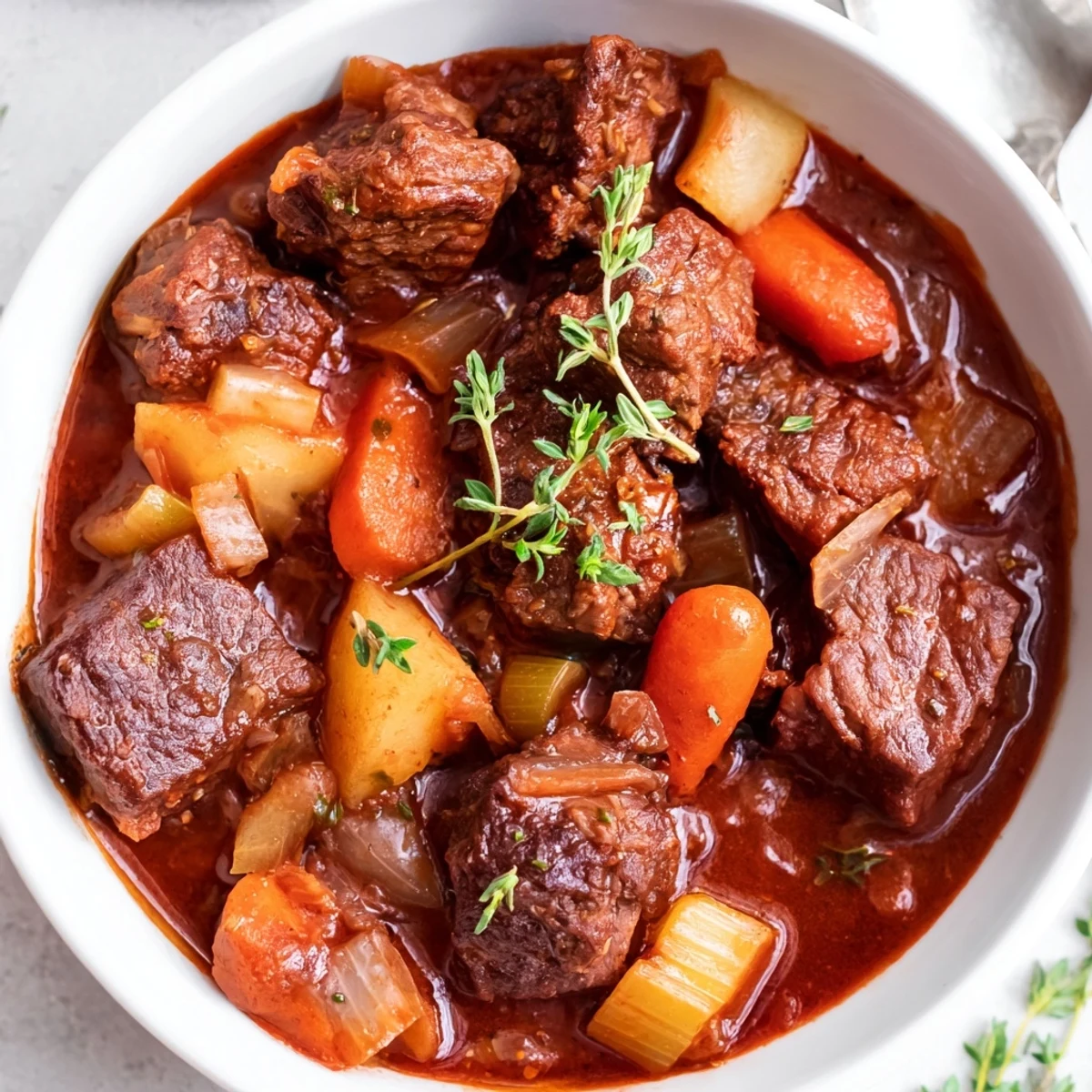 Save
Save There was a Sunday when I pulled this off the stove and set the pot on a trivet in the middle of the table, and nobody moved to serving bowls. We just stood around with forks and bread, eating directly from the pot while the sauce steamed up our glasses.
What to Serve Alongside
Polenta is my favorite pairing because it soaks up the sauce like nothing else, but creamy mashed potatoes or even a slice of thick, toasted sourdough work just as well. A simple arugula salad with lemon and olive oil cuts through the richness and gives you something green on the plate.
Making It Your Own
A splash of balsamic vinegar added with the wine adds a tangy depth that changes the whole character of the stew in a subtle way. You can also toss in a handful of peas or mushrooms in the last twenty minutes if you want more vegetables without extending the prep time.
Storage and Reheating
This stew keeps for three days in the refrigerator and freezes for up to three months, though it rarely lasts that long in my house. The flavor deepens overnight as the herbs continue to infuse the broth, making leftovers the real prize.
- Cool it completely before covering and refrigerating to prevent condensation from watering down the sauce.
- Reheat gently on the stove over low heat rather than microwaving, which can make the beef tough.
- Always taste for salt again after reheating, because cold dulls seasoning and you may need a final pinch.
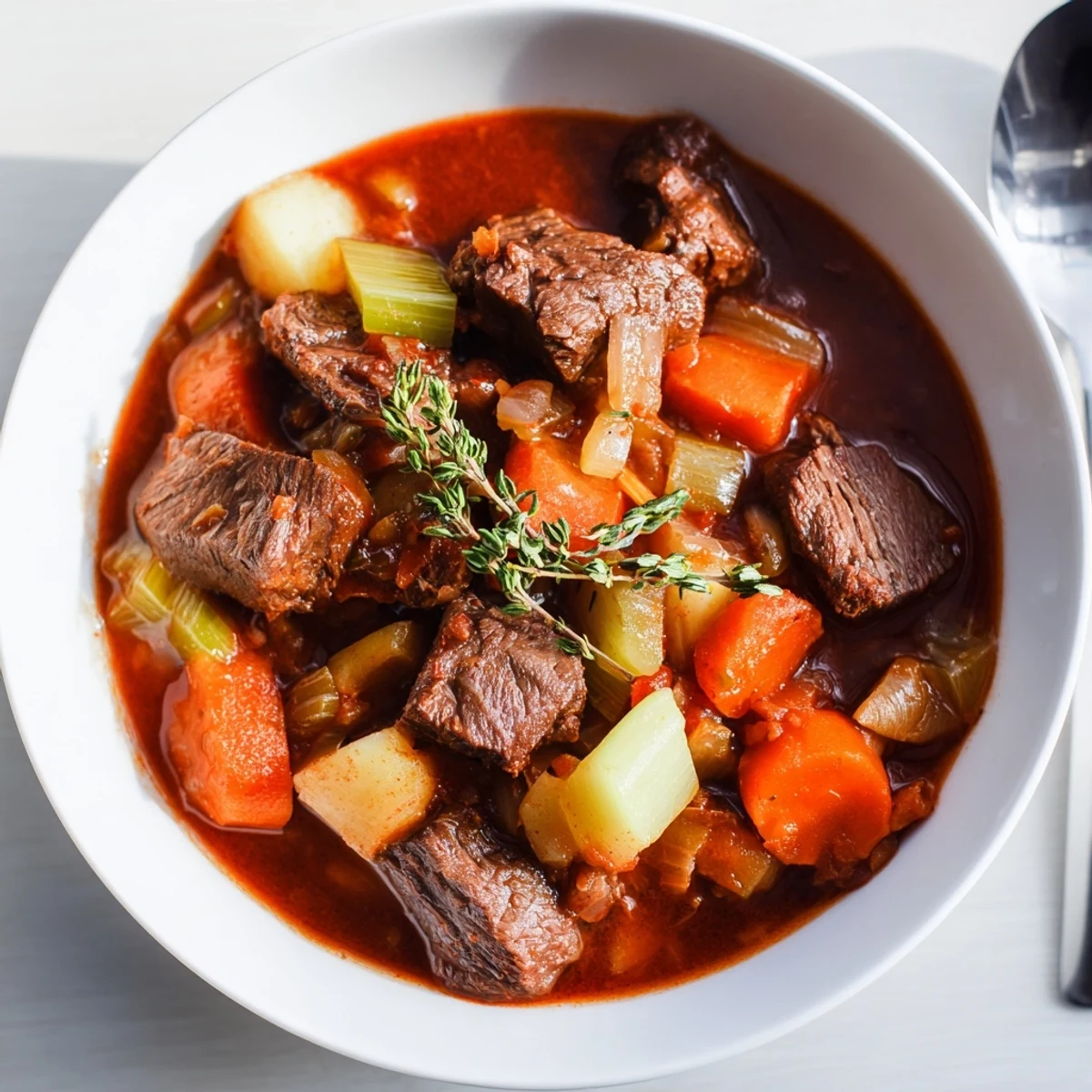 Save
Save Some recipes are just dinner, and then some recipes become the thing you cook when someone needs to feel taken care of. This is that one for me.
Recipe FAQs
- → What cut of beef works best for Spezzatino Di Manzo?
-
Beef chuck is ideal for this dish because it has excellent marbling and connective tissue that breaks down during long braising, resulting in tender, flavorful meat. Other cuts like brisket or short ribs also work well.
- → Can I make this dish ahead of time?
-
Absolutely. Spezzatino tastes even better when made a day in advance, as the flavors have time to meld together. Store it in the refrigerator and reheat gently before serving.
- → What wine should I use?
-
Choose a dry Italian red wine like Chianti, Barbera, or Sangiovese. Since the wine reduces significantly during cooking, use something you'd enjoy drinking. Avoid cooking wines which can be overly salty.
- → How do I know when the beef is done?
-
The beef is ready when it easily falls apart when pierced with a fork. This typically takes about 2 hours of gentle simmering. The sauce should also be thickened and coat the meat.
- → What can I serve with this dish?
-
Rustic bread, polenta, or mashed potatoes are classic accompaniments. For a complete Italian meal, serve with a simple green salad and red wine. Avoid pasta if keeping it gluten-free.